
Oceano is being sacrificed for the Oceano Dunes vehicle park
February 22, 2026
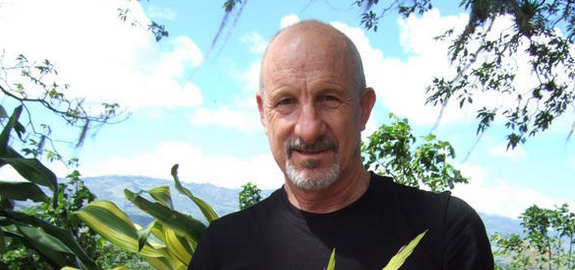
Charles Varni
OPINION by CHARLES VARNI
In a recent opinion piece in CalCoastNews, Jim Suty accused me of spreading “false claims and allegations” regarding previous government agency pledges to create a Southern entrance to the Oceano Dunes State Vehicular Recreation Area (SVRA) and thus remove motor vehicles from Oceano’s beach and dune front.
For most of my life, I have been a professional scientist and researcher. Objective facts are very important to me and I strive to be as accurate as I can in what I say and write.
I was not surprised when I read Mr. Suty’s baseless claims and self-serving fabrications because I have come to expect nothing less from the off-highway vehicle industry which funds his lobbying group. They have never expressed serious understanding nor compassion regarding the negative impacts on Oceano as a result of being the “doormat to the dunes” for more than four decades.
My Suty states, “…the entrances to the Oceano Dunes SVRA through Grand Avenue in Grover Beach and Pier Avenue in Oceano were made permanent many years ago.” This is simply not true and Mr. Suty is either ignorant, seriously confused, or engaging in fabrications and baseless claims.
Here are the past and current facts.
Forty-four years ago, the California Coastal Commission (CCC) approved a temporary coastal development permit for the SVRA. It included temporary permission to use Grand and Pier Avenues as access points to the beach road to the SVRA. Below is a quote from the CCC’s March 18, 2021 staff report.
“In 1982, the base coastal development permit required State Parks to find alternate entrances to the park, including a potential southern entrance (that could avoid the need for vehicles to access the Park from the north). Although State Parks has done studies and unilaterally concluded that the West Grand and Pier Avenue entrances should be the permanent vehicle entrances for the park (including in its draft PWP), the Commission has never analyzed or authorized permanent use of these entrances, as is required by the base coastal development permit. Thus, under the Coastal Act, they remain only temporarily authorized some 40 years later.”
Additionally, Suty states that “the Grover Beach Local Coastal Plan was amended, changing the Oceano Dunes SVRA entrance stations at Grand Avenue and Pier Avenue from temporary to permanent entrance stations.” This is definitely false regarding Oceano because Grover Beach’s Local Coastal Plan is for their city and they have no authority over Oceano. Additionally, these were State Park’s recommendations which were never approved by the CCC. The same CCC report quoted above also notes:
“…the Commission’s direction was for State Parks to undertake an entrance study to address the many issues associated with the two access ways into the park at West Grand and Pier Avenues, particularly since the impacts associated with park entrances were what necessitated the Commission’s interim coastal development permit approval in 1982. The draft PWP, however, simply concludes that the two entrances are the environmentally superior entrances and they should be deemed permanent, without an analysis of alternatives. In addition to those entrances, State Parks proposes new OHV entrances in the south (at Phillips 66 and at the Oso Flaco Lake area). Thus, the draft PWP both proposes to keep the existing entrances as-is, and also proposes to increase coastal resource impacts by adding new entrances with their own adverse impacts.”
Vehicle access to the beach and the SVRA has long occurred via West Grand Avenue and Pier Avenue through the community of Oceano. While these access points are currently operational, historical permitting records demonstrate they were approved as interim solutions pending development of a southern entrance.
More than four decades later, the temporary solution has become de facto permanent—not because of an explicit policy decision, but because the contemplated southern alternative was never implemented.
The historical record shows that the CCC did not treat neighborhood street access as a permanent entitlement insulated from future modification. Rather, it was a pragmatic accommodation in the absence of an alternative.The absence of a constructed southern entrance does not convert an interim approval into a perpetual mandate.
The failure to build the southern entrance does not eliminate the validity of the original planning intent. It simply reflects incomplete implementation. Surfrider is asking that the implementation become a reality.
The most disingenuous of Mr. Suty’s claims is that the SVRA generates $500 million in revenues for SLO County. This study, third in the line of economic impacts of the SVRA in the county (two others in 2007 and 2017) was organized by the Visit SOCAL tourist promotion organization.
The Oceano Dunes stewardship study opens the report’s executive summary with this line: “The Oceano Dunes SVRA is the second most visited destination in San Luis Obispo County with 3.4 million annual visitors in 2019.”
That would be an average of 9,315 persons per day—all in the SVRA. This is simply not true and challenges the integrity of the entire economic aspect of the report. It is another example of manipulating data to create an exaggerated impression of the SVRA’s “positive impact.”
The fact that this 3.4 million number is an estimate of every out of or in county tourist to visit South County— to every state and county park including campers, butterfly preserve visitors, beach walkers, surfers, hoteliers, etc and also includes other tourists who simply came into the “geographic area” of the study, an area which is never defined.
Finally, while the economic impact analysis concluded that tourists account for $511 million dollars, a 10% fraction of that ($50 million) is provided by visitors who only visit the Oceano Dunes (not defined but presumably the SVRA).
It does get confusing when the opening statement in the report says the SVRA was visited by 3.4 million people who generated $511 million in purchases, rentals, housing, food, etc. when, according to their own fact, it was actually only $50 million.
Here is the direct quote from the report: “Based on Tourism Economics’ previous research on the economic impact of tourism in San Luis Obispo County, Oceano Dunes originating from outside San Luis Obispo County spent an average of $150 per visit. Based on this average, total spending by visitors originating from outside San Luis Obispo County, who visited Oceano Dunes as part of their trip amounted to $336.9 million in 2019. More specifically, total spending by visitors originating from outside San Luis Obispo County, who only visited Oceano Dunes as part of their trip, represented $50.5 million in 2019. The $336.9 million in spending by the 2.2 million visitors originating from outside San Luis Obispo County was spread across a number of industries.”
And even this number is highly exaggerated.
With regards to the State Parks funded SVRA economic impact reports, the CCC contracted for professional peer review of their research methods and provides the following information in the March 18, 2021 Staff report (find at slo.surfrider.org)
“Opponents……. have argued that elimination of off-highway vehicle uses at the park will have significant adverse economic impacts to the area. Specifically, they point to State Parks’ economic analysis from 2016 that suggests that the park brings in an estimated $243 million annually to the San Luis Obispo County economy and generates some 3,300 local jobs.
The CCC was provided a professional critique of this analysis when it reviewed the coastal development permit in 2019. That critique suggested that the analysis was deeply flawed, and that the economic benefit from the park was significantly overstated. Given such conflicting information, CCC staff contacted Dr. Philip King, a professor of economics at San Francisco State University, and an expert on beach and park recreational/economic impacts, for a third-party peer review of State Parks’ analysis.
Dr. King concluded that State Parks’ analysis was fundamentally flawed and that it didn’t follow normal and standard professional procedures for such studies. He also noted an arithmetic error that inappropriately increased the total impact of the park by about $120 million, or nearly half of the study estimate. Dr. King also identified that the study improperly focused only on off-highway vehicle use versus closing the park to all use, and that it significantly overestimated off-highway vehicle’s economic value to the area, including because the analysis doesn’t quantify costs and it equates all park benefit to ff-highway vehicle benefit, as if off-highway vehicle is the sole source that can provide any economic activity.
Dr. King also indicates that in his professional opinion, the analysis essentially asks the wrong questions, thus limiting its value as a tool for decision-makers. In fact, the more appropriate set of questions and evaluation would be based on the costs and benefits of different recreational offerings at the park, but State Parks’ analysis does not provide the information necessary to make this evaluation. Oceano Dunes coastal development permit review page 15 Dr. King’s conclusion was that the park would remain a vibrant State Park unit without off-highway vehicle use, would remain a valuable asset to the area, and that a different park that did not provide off-highway vehicle uses but that accommodated less intensive forms of recreation would be at least as valuable to the region economically as the current park operation.
This suggests that potential economic impacts associated with changes in use and intensities of use at the park, including as the Coastal Act and LCPs direct, aren’t likely to significantly alter its economic effect on the area. And to this point, staff notes that some local communities directly adjacent to the park see an untapped potential to create an even better economic model in relation to the way the park effects local economies, one that can be built on a more sustainable set of recreational opportunities, and one that will bring benefit to their communities.”
If you made it this far, thank you for taking the time. And to Mr. Suty, I do my research. Truth and facts are important. The community of Oceano became a “sacrifice zone” for the SVRA.
I don’t think it was intended that way—but certainly the abysmal failure to follow through on a Southern entrance was the major cause of decades long economic repression and lack of community access to a safe beach for its residents and tourists. I hope you and the off-highway vehicle lobby can see the truth in that.
Charles Varni is a resident of Oceano and the chair of SLO Surfrider.



The comments below represent the opinion of the writer and do not represent the views or policies of CalCoastNews.com. Please address the Policies, events and arguments, not the person. Constructive debate is good; mockery, taunting, and name calling is not. Comment Guidelines